Buying a Used Car in Finland: Checklist
When buying a used car, the whole picture matters—not one polished photo or a recent inspection. Before agreeing to buy, check that the advert, the car’s documents, register data and your own observations tell the same story. If you cannot judge the condition yourself, bring an independent specialist before you commit.

Buying a used car step by step
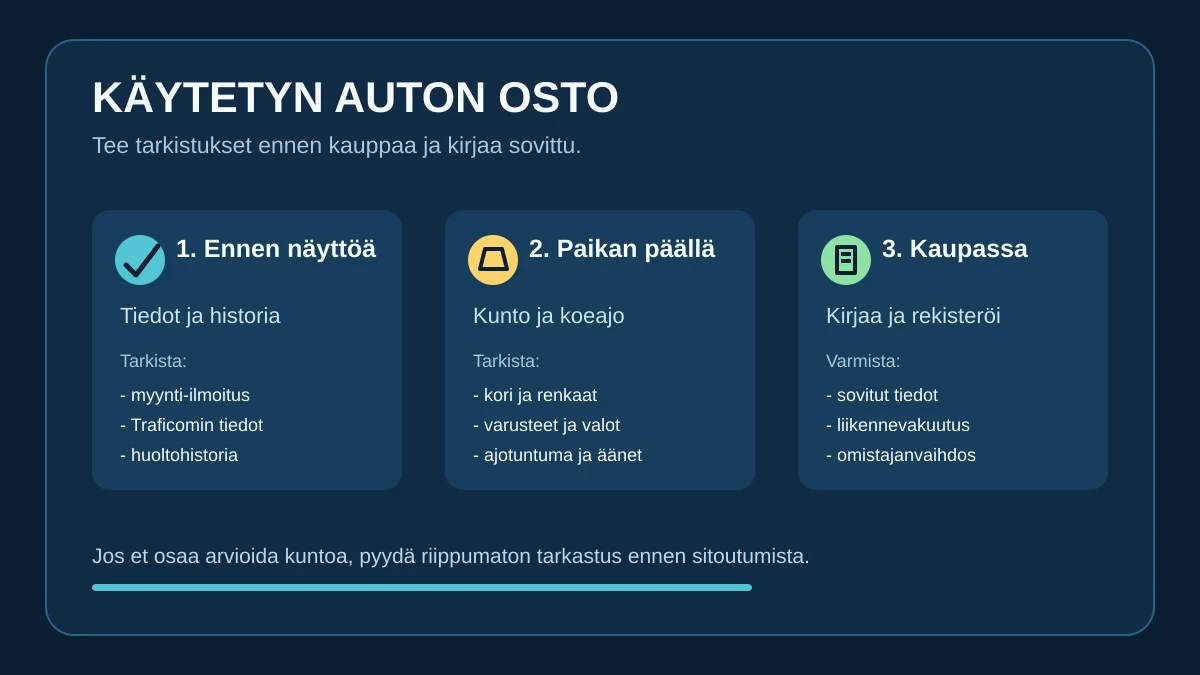
- Define your use case and compare only cars whose size, equipment and powertrain fit it.
- Check the advert, register and inspection data and service history before the viewing.
- Inspect the car in daylight, test every promised feature and take a sufficiently long test drive.
- Arrange an independent condition check or workshop assessment when needed.
- Put everything agreed in writing and complete insurance and change of ownership correctly.
Before the viewing: check these records
You can retrieve technical, inspection and tax data free of charge from Traficom’s vehicle information service using the registration number or VIN. Owner and historical data are paid services. Traficom says the paid history can include ownership, inspection, insurance, deregistration and use history.
Check that the seller is the registered owner or can reliably prove the right to sell the car. A transfer notification means the registered owner has reported the car sold onward; it does not by itself replace your checks.
| Item to check | What to compare | Why it matters |
|---|---|---|
| Sales advert | Model year, mileage, equipment, stated faults and price | Save the advert; its information is part of what was represented about the car |
| Traficom data | Technical, inspection and tax data, plus paid history if needed | Gives you a reference against the advert and seller’s story |
| Service book and invoices | Dates, mileages, work completed and repairs | Helps you ask what has been done and what is still due |
| Inspection records | Latest inspection, repair instructions and reasons for failure | A pass is one data point, not a complete condition report |
| Keys, tyres and accessories | Spare keys, both tyre sets, charging cables and agreed equipment | Check on site that they exist and match the agreement |
Do not confuse the inspection schedule with the car’s condition. A passenger car is first inspected no later than four years after entering service, then every two years until it is over ten years old, when inspection is generally annual. Check the car’s own due date in the register. The vehicle-inspection preparation guide explains the inspection process separately.
On-site checklist
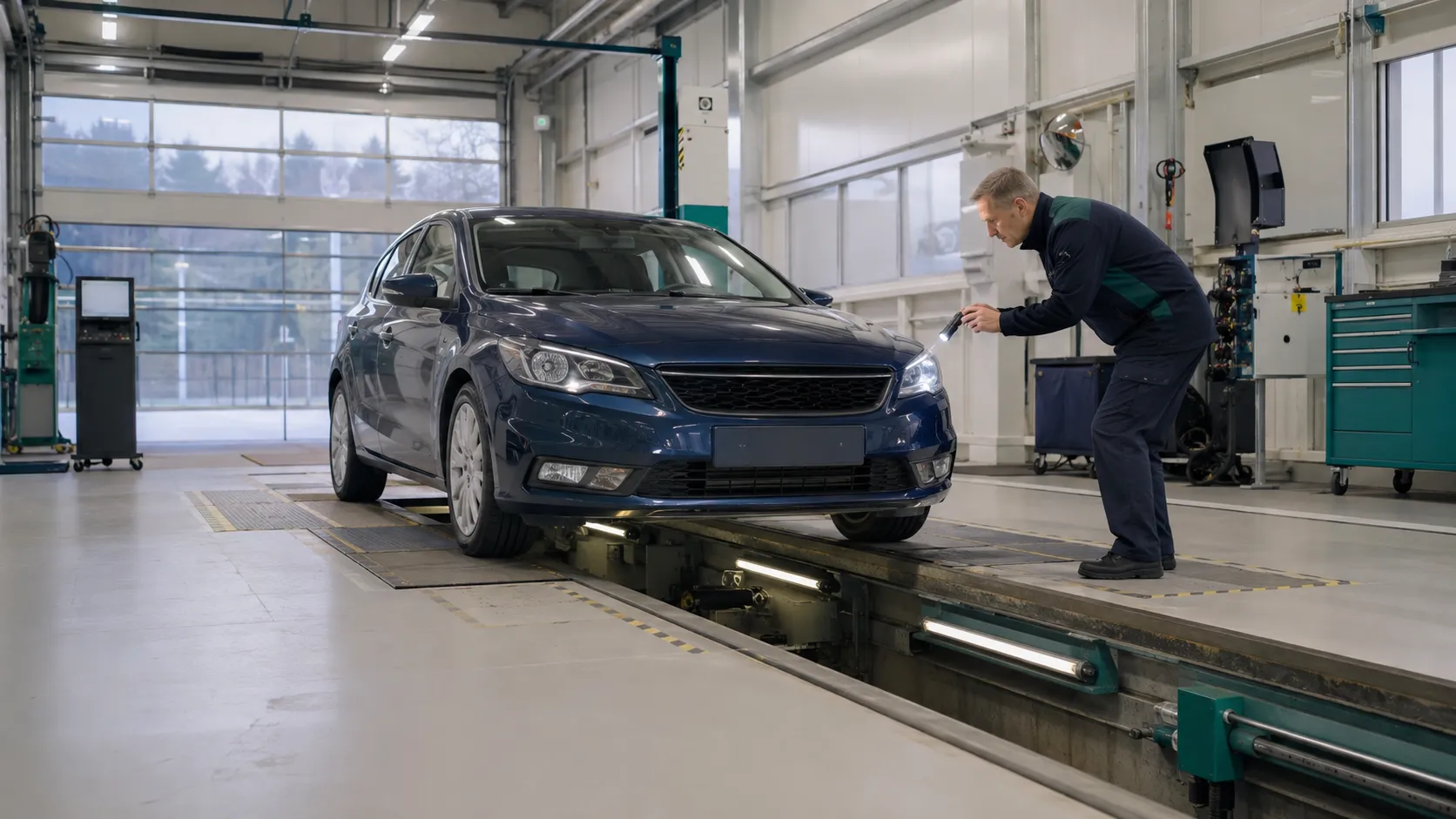
This list does not replace a professional condition inspection, but it helps you make observations in a consistent order. Autoliitto recommends checking documents, the advert’s accuracy, fluids, lights, electrical equipment, both tyre sets and taking a sufficiently long test drive.
Body, tyres and interior
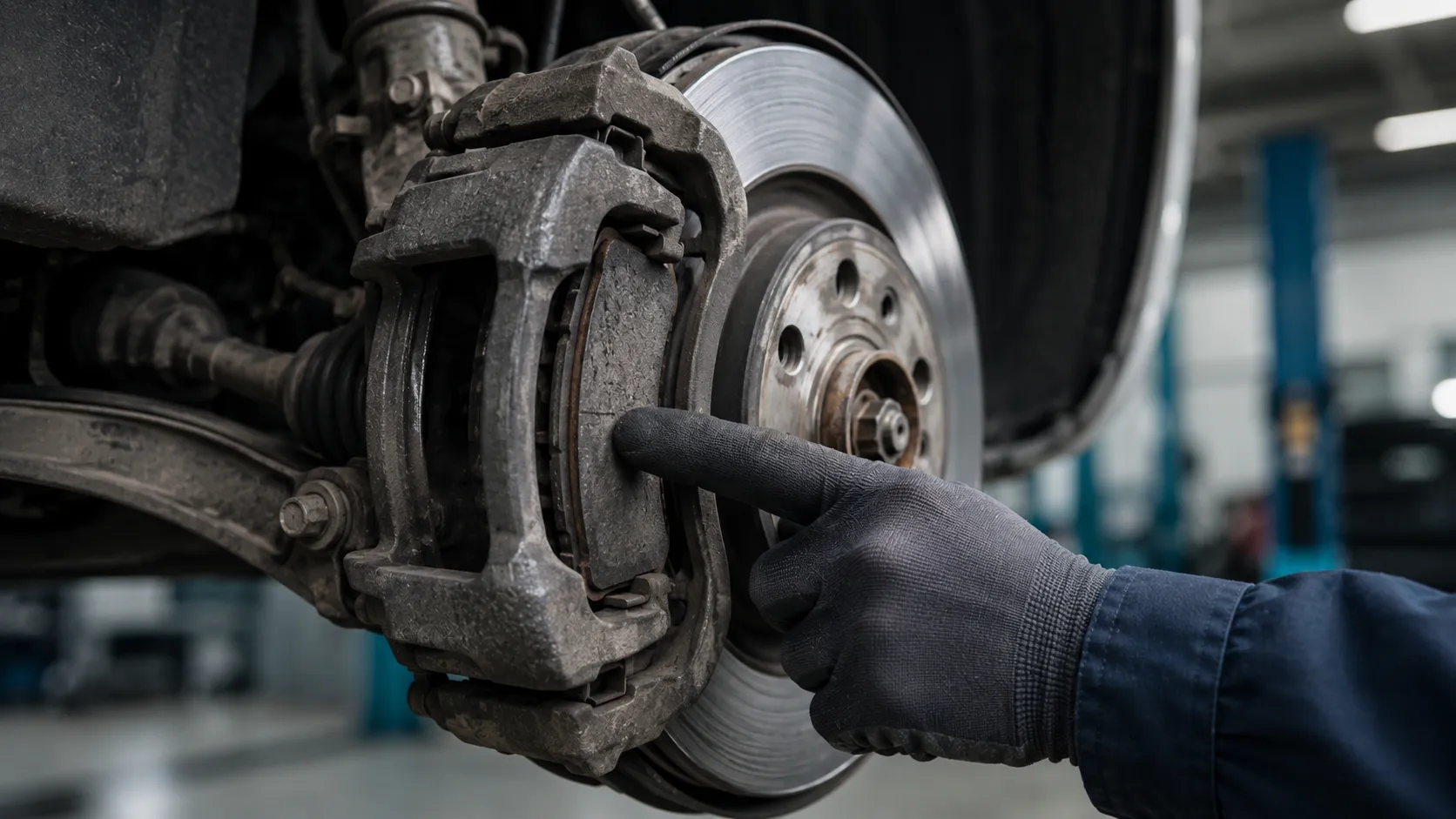
- In daylight, look for colour differences, uneven seams, rust, dents and signs of collision repair.
- Check wheel arches, sills and lower parts that can be seen safely.
- Inspect all four fitted tyres for condition, brand, size and wear. Ask to see the second set too.
- Test seat belts, seat adjustments, windows, locks, air conditioning and every advertised feature.
- Check that dashboard warning lights come on at start-up and then go out normally. Ask for an explanation and written assessment if one stays on.
Engine bay and test drive
- Look for fluid leaks in the engine bay or under the car. Do not touch hot or moving parts.
- Start the car cold if possible and listen for unusual sounds.
- Drive at both urban and motorway speeds when safe and permitted.
- Test braking, steering feel, transmission and visibility without creating a traffic risk.
- Turn the radio off briefly and listen for knocks or vibration.
- Compare what you observe with the seller’s statements and ask for unclear points in writing.
If the observations conflict with the advert or you do not know how to interpret them, pause the decision and arrange an inspection. The guide on choosing a good car repair shop can help you find a suitable assessor.
Private seller or car dealer?
The seller type affects the information available, the contract and where you can turn if a problem appears. It does not remove the buyer’s duty to inspect the car before purchase.
| Question | Car dealer | Private seller |
|---|---|---|
| Consumer-law liability | Under KKV guidance, the dealer is responsible for defects under the Consumer Protection Act | The Consumer Protection Act does not apply between two private individuals |
| Warranty | May come from the manufacturer, importer or dealer; check its terms | A manufacturer or importer warranty may still be valid under its own terms |
| If you suspect a defect | Contact the seller before authorising repairs elsewhere and give it a chance to investigate | Check the contract and documents; KKV consumer advice does not handle private-to-private car sales |
| What to record | Price, trade-in, equipment, stated faults, repairs and every special agreement | Record the same information just as carefully |
KKV stresses that not every fault in a used car entitles the buyer to a remedy. Age, mileage, price, information given and normal wear all affect the assessment. Do not assume a warranty exists just because you bought from a dealer; check whether one was granted and what it covers.
Compare the whole deal, not just the model name
A single market-price table becomes outdated quickly and does not show whether two adverts are genuinely comparable. Compare the total cost in the same way you compare condition.
At minimum, compare:
- model year, mileage, powertrain and drivetrain;
- equipment level, tyre sets, tow bar, heating and charging accessories;
- service history, next inspection date and stated faults;
- what you will need to buy or repair immediately after the sale;
- terms such as warranty, financing and trade-in allowance.
You can browse Nettiauto and Autotalli for market context, but verify each advert against the car and documents. A low asking price alone does not make a car cheap.
Extra checks for a used electric car
For an EV, add the battery, charging and charging equipment to the ordinary checklist. Autoliitto considers the battery’s State of Health (SoH) and the battery enclosure’s condition essential.
Ask how the SoH was measured, when it was measured and whether the manufacturer’s battery warranty is still valid. Confirm that agreed charging cables are present and that charging works according to the car and charger instructions. If the records are unclear, ask a dealer workshop or independent specialist for an assessment. For background, see the EV service and charging guide.
When the deal is made
Put at least the parties, vehicle identification, price, payment method, handover date, included equipment, stated faults and agreed repairs in the sales contract. Keep the advert, messages, invoices and contract.
If the vehicle is in road use, arrange traffic insurance before reporting the change of ownership. Traficom says the buyer must register the change within seven days of the sale. The practical process depends on whether the seller has filed a transfer notification or supplied a transfer certificate; follow Traficom’s buyer guidance.
Frequently asked questions
What should I check before buying a used car?
Check the advert, Traficom data, service history, inspection records, bodywork, tyres, lights, electrical equipment and your test-drive observations. If anything remains unclear, arrange a condition inspection before buying.
Where can I find the car’s service history?
Ask the seller for the service book, invoices and other documents. Traficom’s service shows technical, inspection and tax data free of charge; ownership and history data are paid services. Register data does not replace a service book.
Is it better to buy from a private seller or a dealer?
For a used car bought from a dealer, the dealer’s defect liability under consumer law applies. The same consumer protection does not apply to a private-to-private sale. Base the decision on the car, terms and your ability to check its condition—not simply on which seller appears cheaper.
What documents are needed for a car sale?
Record the vehicle identification, price, payment method, handover date, equipment, stated faults and agreed repairs in the contract. Keep the advert, messages, service documents and ownership-change information too.
Compare car dealers and request an assessment
Find used cars through car dealers and compare services in Helsinki, Tampere and Turku. If you want to ask a seller for information, you can also use the request-a-quote form.
Sources
- Traficom: check vehicle information — free and paid vehicle data; checked 9 September 2026.
- Traficom: buyer’s change-of-ownership guidance — ownership change and procedures; checked 9 September 2026.
- KKV: defect in a used car — dealer liability and assessment limits; checked 9 September 2026.
- KKV: responsible parties in car sales and repairs — dealer and private-sale consumer-protection differences; checked 9 September 2026.
- Autoliitto: buying a used car — checklist and test-drive advice; checked 9 September 2026.
- Autoliitto: buying a used electric car — battery SoH and enclosure checks; checked 9 September 2026.