Winter Car Wash in Finland: Salt, Safety and Drying
You know that morning: hard frost, a door handle like a frozen iron bar, and a grey-white crust on the side of the car that feels like sandpaper under your fingers. It is not just dirt. It is road salt, and much of it ends up in places you never see: the sills, the wheel arches and the underbody.
Winter washing is one of the easiest ways to slow corrosion down, but only if it is done properly. A poorly dried car can swap one problem for another: moisture gets into the seals, freezes overnight and the door is stuck in the morning. This guide covers what road salt really does to a car, how to choose a wash programme whose contents match winter conditions, and how to finish the wash so that the door opens on the first pull in the morning.
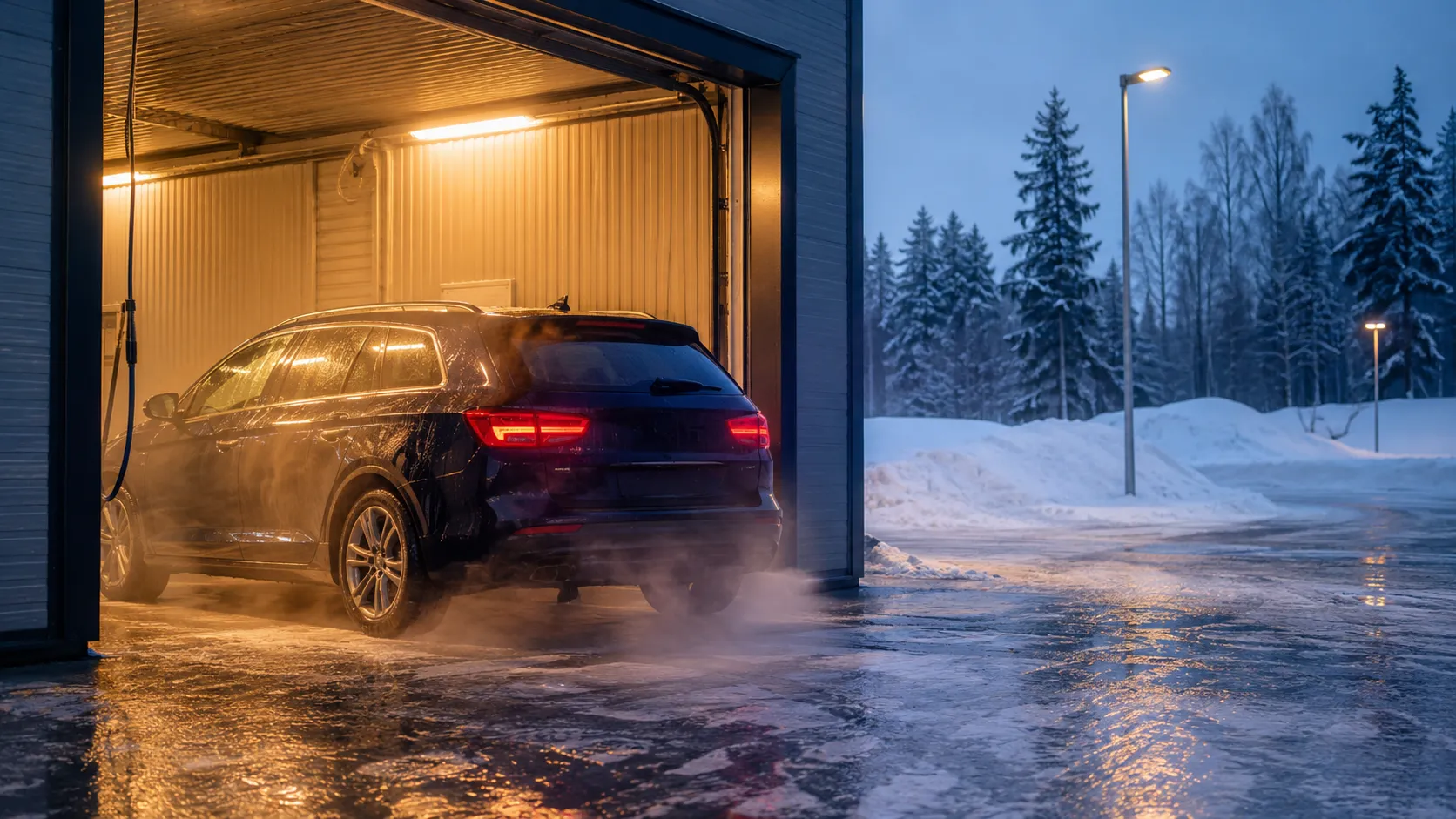
Why is it worth washing a car in winter?
A Finnish winter is a peculiar combination for a car: the roads are salted, and slush keeps the salt in solution on the paintwork for weeks at a time. According to Neste’s guidance, road salt reaches painted surfaces and structural parts, which accelerates corrosion. At the same time slush, sand and tar thrown up by studded tyres make the surface harder to clean if they are left in place for long.
According to the Finnish Transport Infrastructure Agency, salt is used mainly on the busiest roads, on about 9,500 km of highway. On roads with medium traffic, a good 11,000 km, slipperiness is tackled with a combination of salt and sand, and other roads are gritted. In some groundwater areas formates are used instead of salt: they are more environmentally friendly than conventional road salt but more expensive. If you commute along main roads, your car gets a salt bath practically every winter day. According to an answer given to Parliament in 2019, some 110,000 tonnes of salt went into de-icing in a single winter.

A mild winter is not gentle on a car either. According to Moottori magazine, in a mild winter the temperature hovers around zero, the roads are kept clear with salt and the underbody stays wet – and that is exactly what stresses metal structures. Around freezing point is therefore not the moment to postpone a wash.
The benefit of a winter wash is concrete when the wash also reaches the places where dirt accumulates:
- the underbody and wheel arches, which take everything thrown up from the road;
- the sills and lower body panels, where moisture lingers;
- the wheels and the area around the brakes;
- the lower edges of the doors and the rear bumper, where mud sticks easily;
- scratches and stone chips in the paint, where rust can get started.
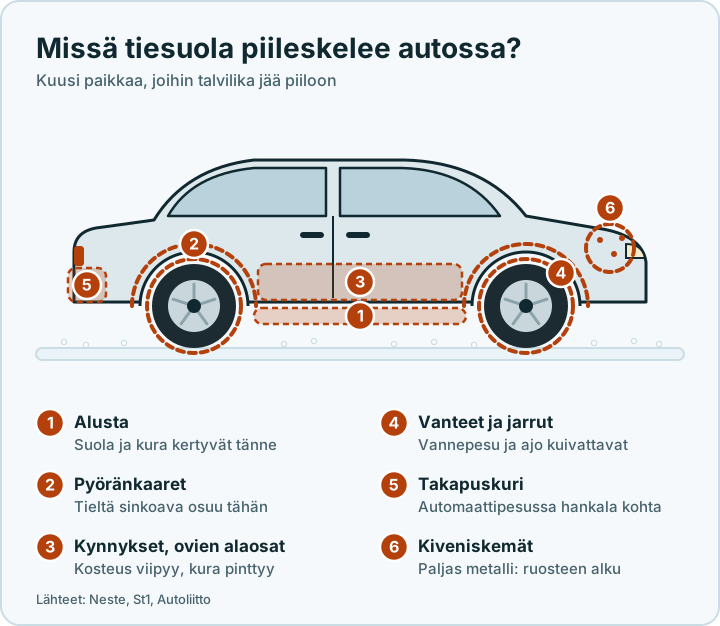
Washing does not, however, repair existing rust, damaged paint or a broken underbody coating. It is prevention, not repair. If you notice rust or paint damage, ask a garage or a paint shop for a separate assessment.
How often should a car be washed in winter?
There is no official wash interval that suits everyone. A practical rule of thumb is to wash the car after a salty or slushy spell. If you drive a lot on salted roads, a rhythm of every two to four weeks often works; if you drive less, the gaps can be longer. The important thing is that salt does not build up on the car for months.
Timing matters almost as much as the interval:
- Wash right after a spell of salt and slush, while the dirt has not yet had time to set.
- Choose a milder day or a heated hall, so that you have time to drive the car dry before night.
- Do not wash outdoors right before a hard frosty night, unless you can dry the seals and drive for a while before parking.
Some wash chains have monthly or seasonal packages that make regular washing cheaper. Compare the terms before committing: how many washes are included and which programme the package covers. You can find example prices and a comparison of wash types in the car-wash price guide.
Choose a wash programme for winter conditions
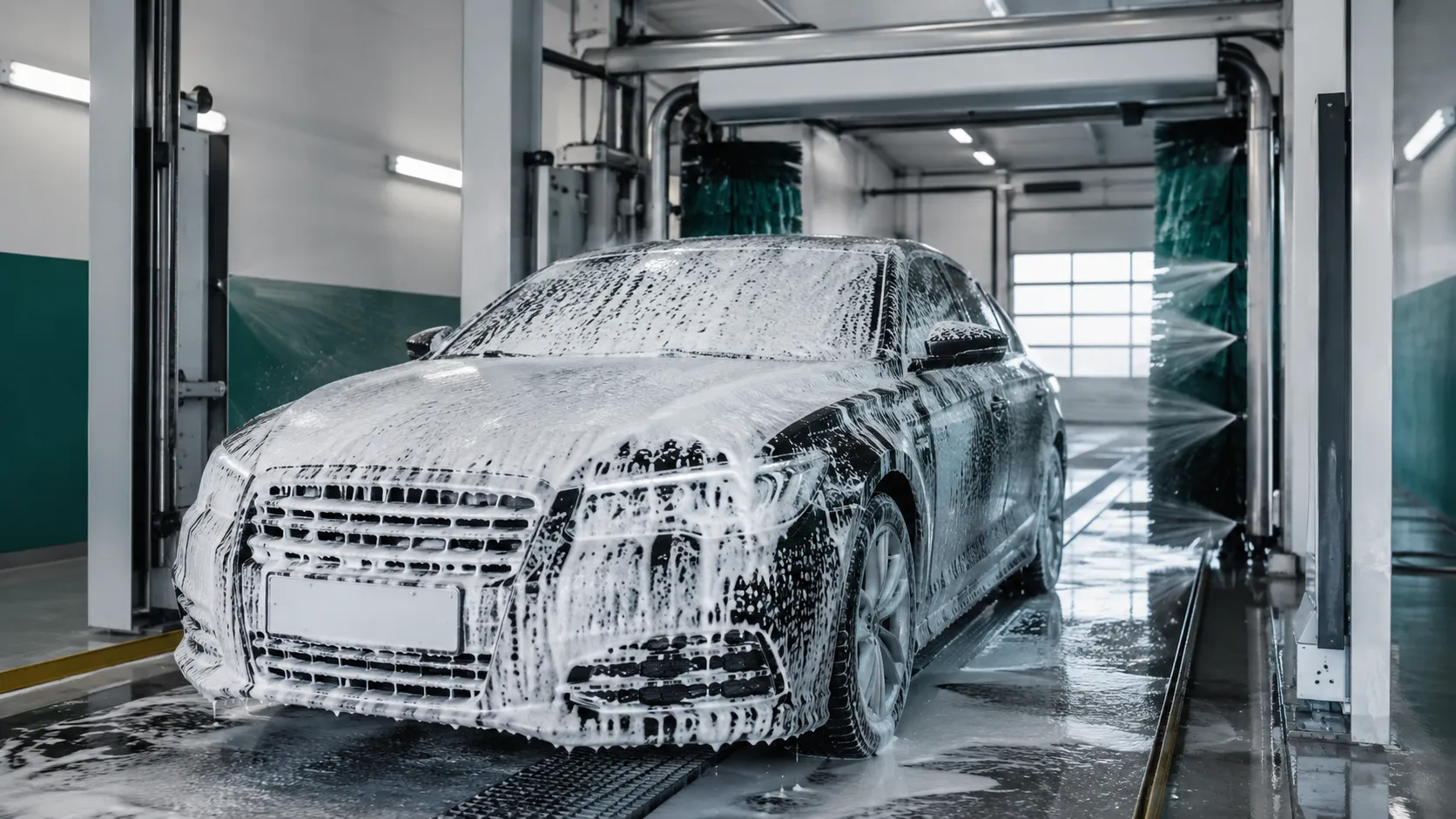
The name of a wash programme – Luxury, Premium or Winter – rarely tells you anything. In winter the contents are what count. Look at the price list or ask at the station whether pre-wash, underbody washing, wheel washing and drying are included. St1’s frequently asked questions describe underbody washing as an effective way to remove road salt from the underside of a car in normal freezing conditions.

| Situation | What to compare in the programme | What to do as well |
|---|---|---|
| Ordinary slush and road dirt | Pre-wash, washing and drying | Check the door handles and flaps after the wash |
| Salty or muddy conditions | Underbody and wheel washing | Check that the programme suits your car |
| Stubborn dirt or awkward spots | Hand pre-wash, or a service where the scope can be agreed | Tell the wash operator about the dirt and the result you want |
| Considering wax | Whether wax is included or is a separate service | Ask about the preparation and the scope of the work |
Autoliitto points out that in winter an automatic wash can struggle with, for example, the areas around door handles, mirrors, wheels, the rear window, the rear bumper and certain recesses. That does not make an automatic wash the wrong choice, but it tells you which points to check afterwards. If dirt remains visible, choose a broader programme or a hand wash service next time.

Automatic, self-service or hand wash?
Every way of washing has its place in winter. The choice depends on how dirty the car is and how much time and effort you want to spend.
| Washing method | Where it is strongest | What to keep in mind |
|---|---|---|
| Automatic wash | Fast and easy; the programme can include pre-wash, underbody washing and drying | The areas around door handles, mirrors, wheels, the rear window and the rear bumper can stay dirty |
| Self-service bay | You decide which parts the water is aimed at | Rinse the underbody and wheel arches; do not spray high-pressure water at close range onto seals and locks; you do the drying yourself |
| Hand wash or a professional service | The most precise result for stubborn dirt and awkward spots | Price and booking; ask in advance what the service includes |
| Waterless or dry wash | Little water, so the freezing risk is smaller | Suitable for light dirt; a thick layer of salt and sand must be rinsed off before you touch the surface with a cloth |

Washing in your own yard is not always an option. A housing company’s rules or a municipality’s environmental regulations can restrict washing in the yard, and at professional car washes the wash water is directed to treatment. Check the rules before you pick up the hose, and remember that in freezing weather an outdoor wash is a freezing risk in any case.
Can you wash a car in freezing weather?
A car can be washed in freezing weather too, but there is no single temperature limit that applies everywhere. Neste Easy Wash says that station closing practices and temperature limits can vary from hall to hall. So check your own wash facility’s instructions before setting off.
On a frosty day, what matters is how the wash facility’s drying works and what you do after the wash. St1 advises against leaving a freshly washed car parked immediately: driving helps dry surfaces and reduces, for example, water freezing on the wheels. This is a practical tip, not a promise that freezing will never happen.
If the car has a roof box, roof bars, an external spare wheel, auxiliary lights or other unusual equipment, check the suitability of the wash machine in advance. The wash facility’s instructions and the car’s owner’s manual come first.
Winter washing step by step
1. Remove loose snow and ice carefully
Clear the snow and loose ice off the car before washing. Neste points out that with an icy or snow-covered car the pre-wash may not work as intended, because the detergents cannot reach the surface straight away. Do not scrub a dirty surface hard with a brush or scraper, as grains of sand scratch the paint.
2. Choose a programme that includes underbody washing when needed
When road salt has been used on your routes, or the car is clearly covered in slush, underbody washing is a sensible step to check for. It is not automatically part of every programme. In St1’s winter wash package example, underbody and wheel washing are explicitly parts of the programme, not a general assumption in all washes.
3. Check the visible problem areas after the wash
Look especially at the wheel arches, wheels, sills, the areas around the door handles, mirrors, the rear window and the rear bumper. If sand or mud is left on the surface, do not add wax on top of a dirty surface just because it is part of the programme’s name. The extent of the cleaning is best decided on the basis of the wash result.
4. Dry the seals and check the doors
Neste advises drying the door and tailgate seals immediately after the wash. Drying the fuel filler flap can also be useful if it is prone to freezing on your car. Open and close the doors and flaps carefully before leaving the car parked in the cold for a long time.
How to prevent a car from freezing after a wash
After a wash, a car’s worst enemy is water that stays hidden. It collects in the grooves of the seals, on the edges of the doors, in the hinges of the flaps and in the lock cylinders, and a frosty night turns it into ice.
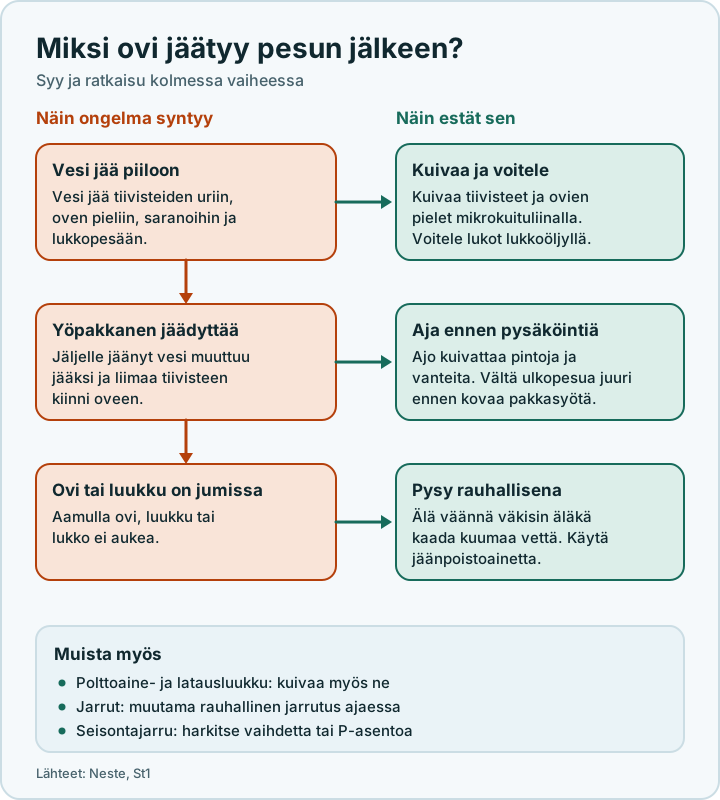
These measures will keep that from happening:
- Lubricate the locks when you wash. St1 recommends lubricating the lock cylinder with lock oil. Always choose a product intended for locks and follow the car manufacturer’s instructions. Do not add ordinary oil or another substance just in case.
- Dry the seals with a microfibre cloth. Also take in the door edges, the contact surfaces and the mirrors. A care product for rubber seals can make opening easier, but check the product and the owner’s manual first.
- Remember the flaps. In addition to the fuel filler flap, on an electric or hybrid car you should check the charging flap and its surroundings, following the owner’s manual.
- Drive before you park. A few kilometres of driving helps dry the surfaces and the wheels.
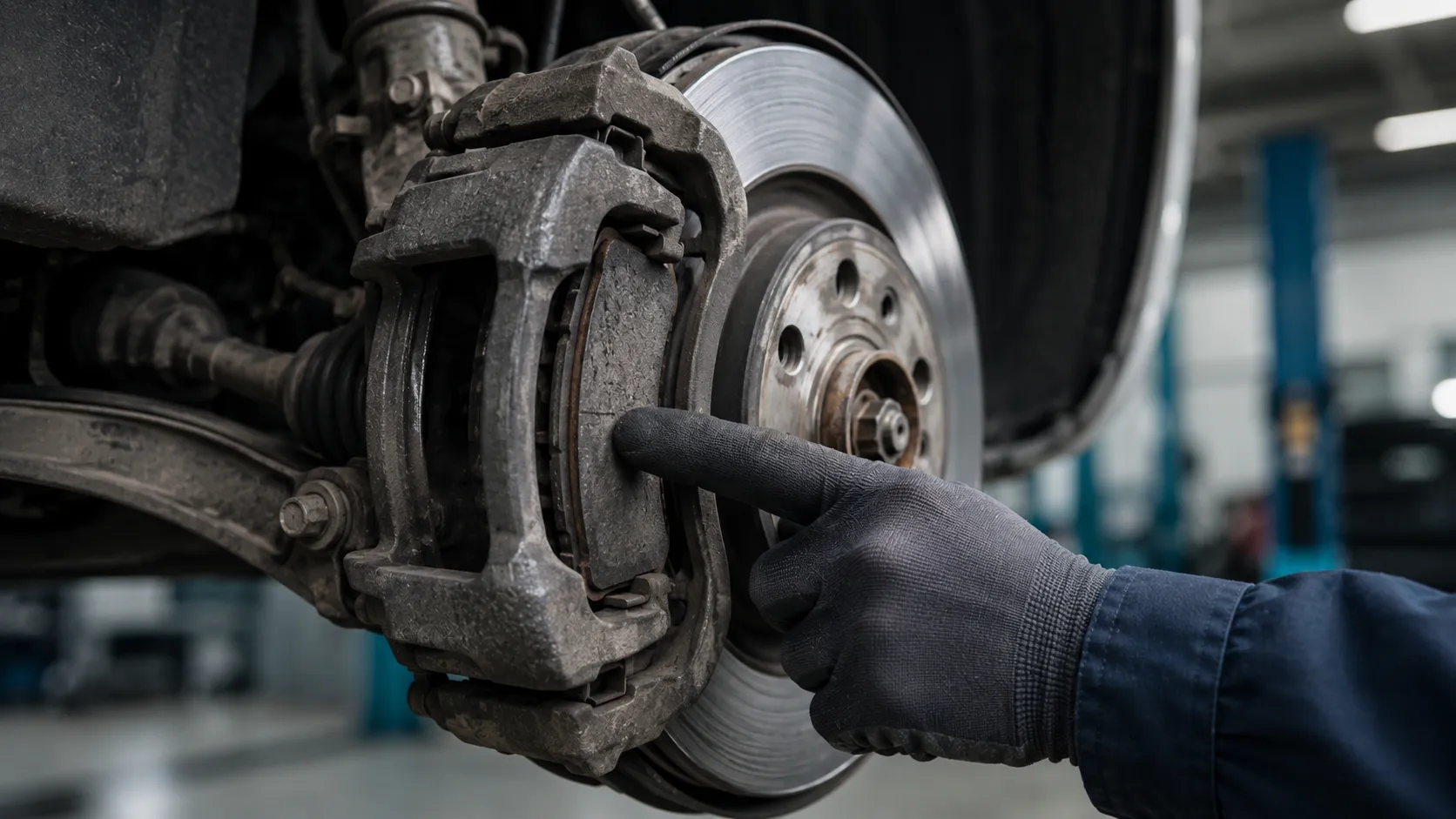
- Dry the brakes by driving. After a wash the brakes are wet. A few gentle stops while driving help dry them. In hard frost a wet parking brake can freeze on, so consider using a gear or the P position instead of the parking brake, within the limits allowed by the owner’s manual.
- Do not force anything and do not pour hot water. If a door, flap or lock has already frozen, avoid forcing it open. A sudden change in temperature can stress glass and paint. Use a de-icer intended for the purpose, follow the car’s owner’s manual, or get help if needed.
Is it worth waxing a car in winter?
Waxing is an optional protective finish, not a required part of a winter wash. According to Neste, a waxed paint surface repels dirt and tar better, and their guidance considers waxing possible in winter too. The product, the preparation and the durability vary from one wash operator to another, however.
When comparing waxing, ask these three questions:
- is the wax applied to a clean surface, and what does the wash programme include;
- is it a finishing step of an automatic wash or a separate treatment;
- what does the service provider promise for that particular treatment.
That way you do not compare a quick add-on step in a wash programme with a broader surface treatment booked separately as if they were the same product.
When is washing no longer enough?
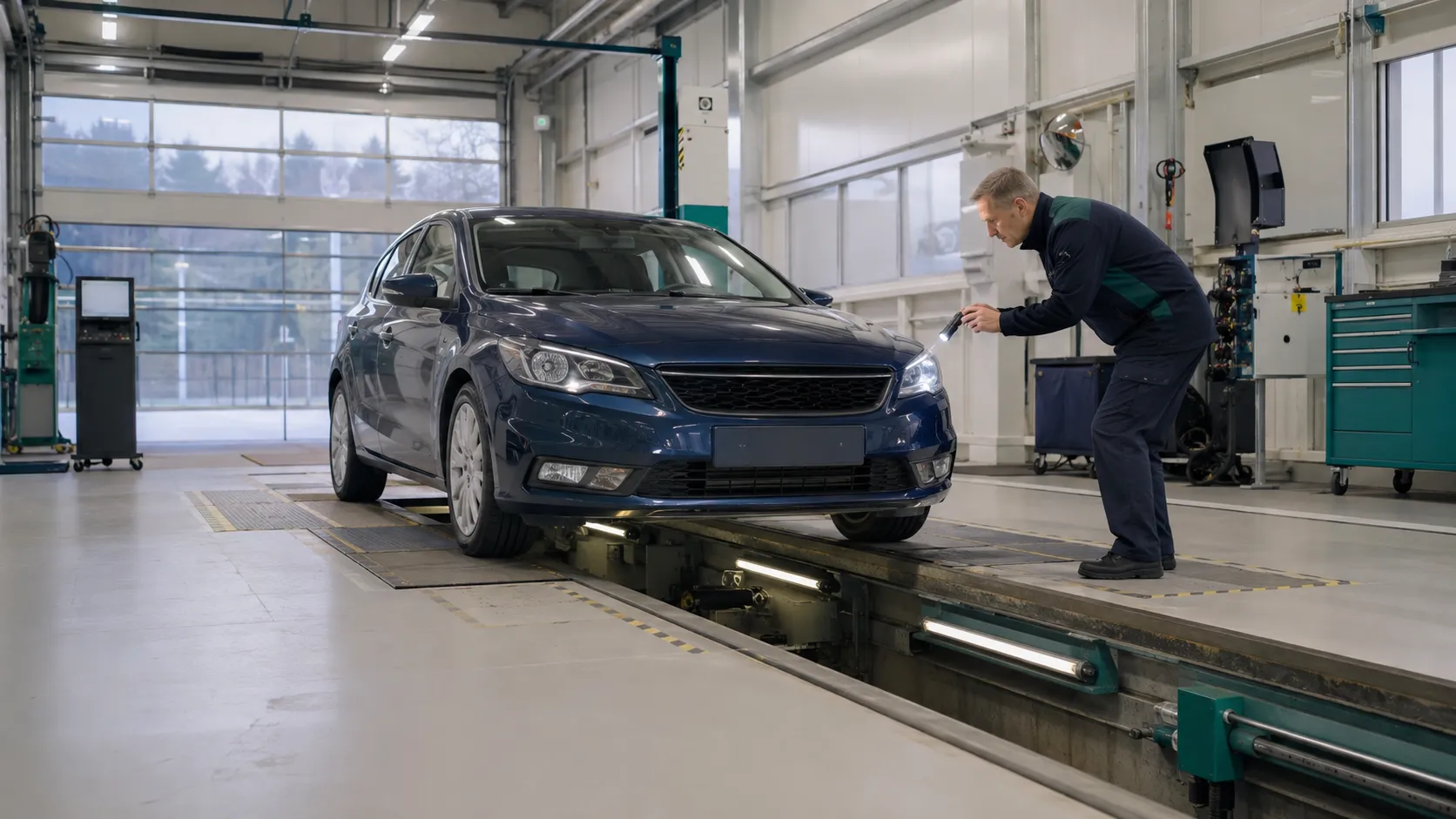
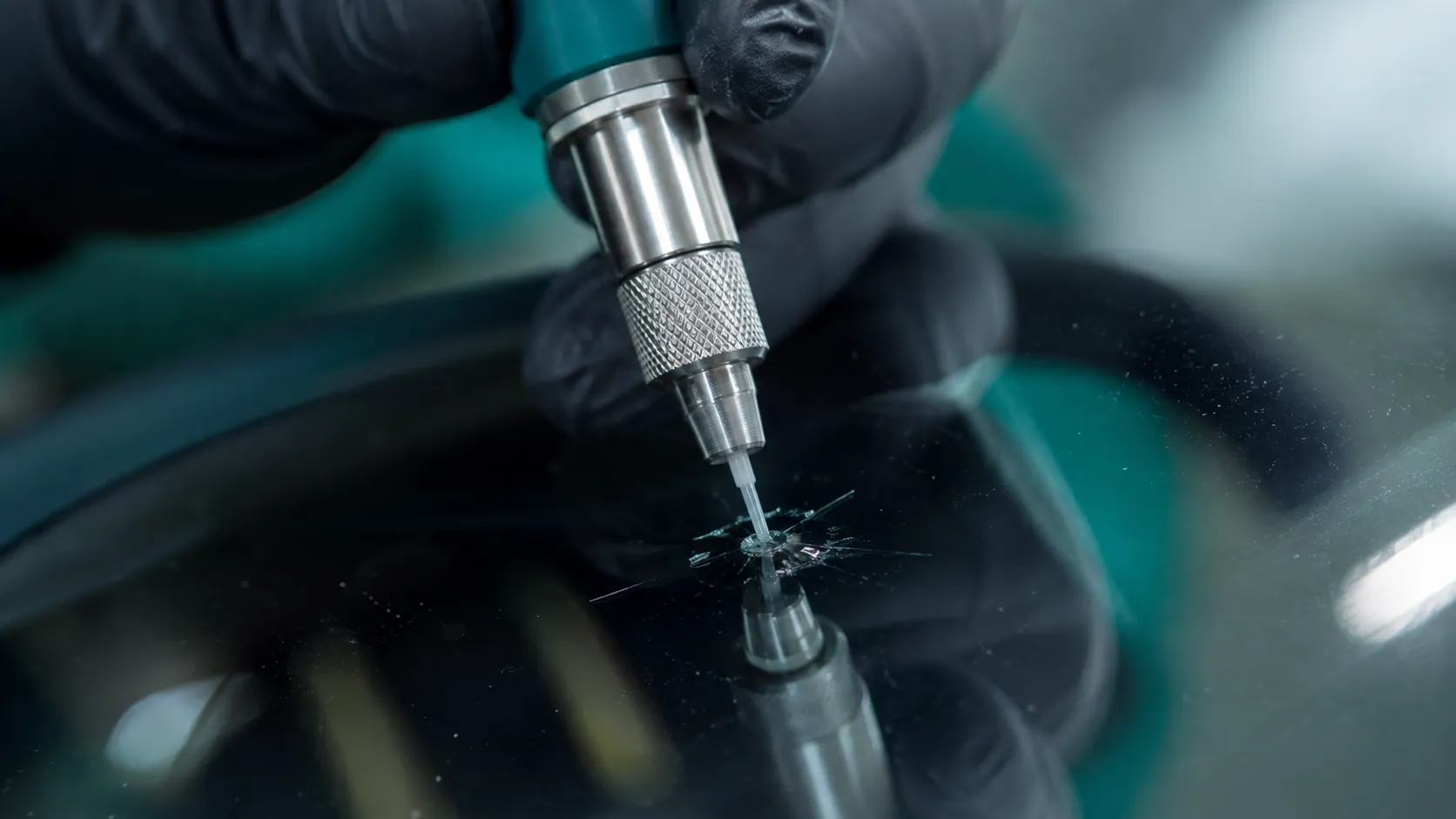
Washing does not make rust disappear. If you notice bubbling paint, brown spots on the sills, or stone chips where metal shows at the bottom, get a professional assessment before the damage spreads. You can find paint repairers at car paint shops, and small stone chips are worth dealing with in good time: read more in the stone chip repair guide. If the sound or feel of the brakes changes during the winter, check the situation in the brake service price guide and book a service appointment. Preparing for the spring inspection is also a good moment to look at the car’s overall condition.
Practical winter-wash checklist
- Check the wash facility’s frost limit and opening hours before setting off.
- Make sure underbody washing is included in the programme you choose.
- Remove loose snow and ice gently before washing.
- Lubricate the locks with a product intended for locks.
- After the wash, check whether dirt is left on the wheels, wheel arches or rear bumper.
- Dry the door and tailgate seals and the edges of the flaps.
- Do not leave the car standing in one place for a long time right after the wash if you can drive for a while to help drying.
- If a door, flap or lock has already frozen, avoid forcing it open. Follow the car’s owner’s manual or get help if needed.
Frequently asked questions
Should a car be washed in winter?
A winter wash is useful because road salt, moisture and road dirt stress the car’s surfaces and structures. Especially in salty or slushy conditions, choose a programme where you can check what the underbody washing includes.
How often should a car be washed in winter?
There is no official wash interval. A practical rule of thumb is to wash the car after a salty or slushy spell. If you drive a lot, a rhythm of every two to four weeks often suits. The important thing is that salt does not build up on the car for months.
Can you wash a car in freezing weather?
Yes, if the wash facility is open and its instructions allow washing at that temperature. There is no single frost limit that suits every station. Dry the seals after the wash and, if possible, drive for a while before parking for a long time.
How is road salt removed from a car?
Wash the car with a programme that has an adequate pre-wash and, when needed, underbody washing. Also check whether wheel washing is included in the programme if you want it. Underbody washing is a specific work step, not an automatic assumption.
Which wash programme is best in winter?
The best programme is one whose contents match the need: pre-wash, underbody washing, wheel washing and drying. The name of the programme does not matter. If the car is heavily encrusted, consider a hand pre-wash or a professional service.
Why does a car door freeze after washing?
During a wash, water is left in the seals and on the door edges; it freezes in the cold and glues the door shut. Dry the seals immediately after the wash, open and close the doors carefully, and drive for a while before parking for a long time. If the door is already frozen, do not force it.
What should you take to a wash bay?
Take a microfibre cloth for drying the seals if the wash facility does not have a suitable tool. Also check the wash facility’s instructions, the car’s machine compatibility and any restrictions on accessories such as a roof box before driving in.
Find a car wash that suits winter
Salt does not wait for spring, so the best moment to wash is while the car is still in a salt bath less than a week old. Compare car washes by location and service range. If you like, start with local options: car wash in Helsinki, car wash in Espoo and car wash in Turku. A comparison of wash types and published example prices can also be found in the car-wash price guide.
Sources
- Neste: washing a car in freezing weather — winter dirt, underbody washing, waxing and seal care; checked 9 September 2026.
- Neste Easy Wash — station-specific temperature limits; checked 9 September 2026.
- St1 Car Wash: frequently asked questions — washing in frost, underbody washing, drying and lock cylinder care; checked 9 September 2026.
- Autoliitto: washing a car — difficult areas in an automatic wash and comparison of washing methods; checked 9 September 2026.
- Verkkouutiset: Road pre-salting is important right now — the kilometres salted and the use of formates according to the Finnish Transport Infrastructure Agency; published 30 November 2022.
- Parliament of Finland: answer to written question KKV 100/2019 vp — the amounts of road salt used.
- Moottori: 32 kilograms of salt per car — the effect of a mild winter on car corrosion; published 11 February 2015.